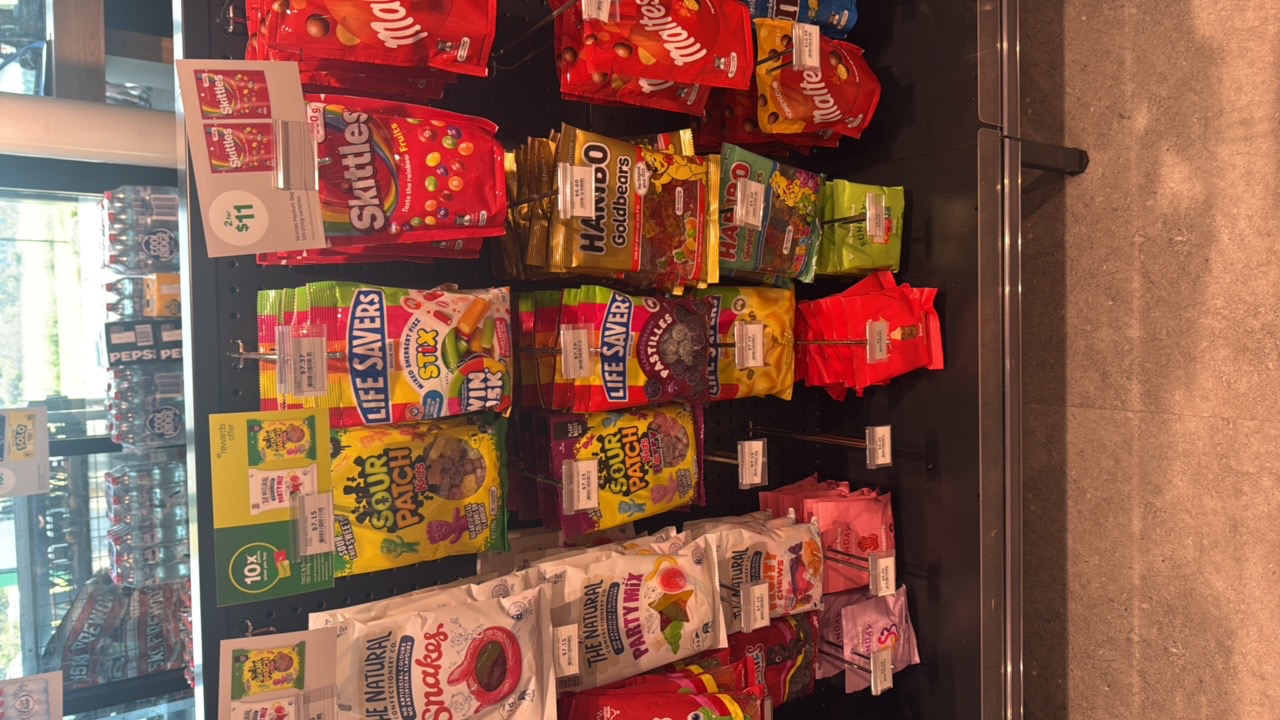
The candy was created in Ontario, Canada in the early 1980s by Frank Galatolie for Allan Candy Company, originally launched as 'Mars Men' to capitalise on the space craze. Rebranded as 'Sour Patch Kids' in 1985 to ride the Cabbage Patch Kids doll phenomenon — demonstrating the brand's opportunistic marketing DNA from day one. Cadbury Adams acquired the brand when it purchased Allan Candy Company. When Kraft Foods split in 2012, Mondelēz International inherited the Cadbury confectionery portfolio, including Sour Patch Kids. The brand has since become one of the top-selling sour candies globally, heavily marketed through gaming partnerships, esports sponsorships, and social media aimed squarely at Gen Z.
No overt deception, but the rebellious, anti-establishment 'First they're sour, then they're sweet' personality creates cognitive distance from Mondelēz's corporate boardroom. Packaging emphasises the character mascots rather than any corporate lineage. Australian consumers would reasonably assume it's an independent novelty brand.
Every bag purchased sends profits to Mondelēz International headquarters in Chicago, Illinois. Mondelēz reported USD $36.4 billion in revenue for 2023. Australian sales contribute to this American multinational's global confectionery dominance.
Purchasing Sour Patch Kids supports a multinational corporation that has faced criticism over palm oil sourcing and cocoa supply chain ethics. Money leaves the Australian economy entirely, benefiting American shareholders rather than local confectioners.
For Australian-made sour candies, try The Natural Confectionery Company's sour range (though note: also Mondelēz-owned — the camouflage runs deep). Genuinely independent options include Darrell Lea's sour straps, or small-batch makers like Sticky (Melbourne) who produce artisan sour candies.